https://jimmyvanheusen.bluemusicgroup.com

 Reflections in Real Time
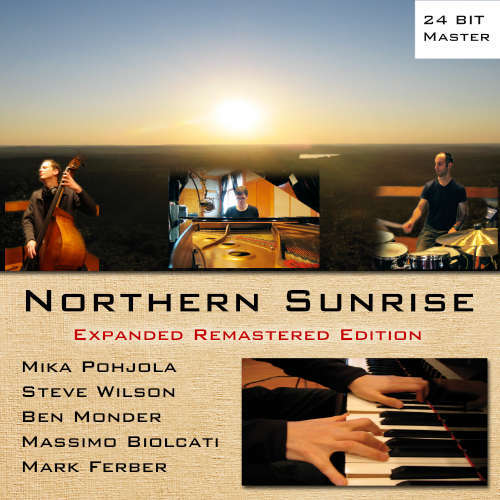 Northern Sunrise
 The Red Bicycle
 The Poll Winners Vol 1
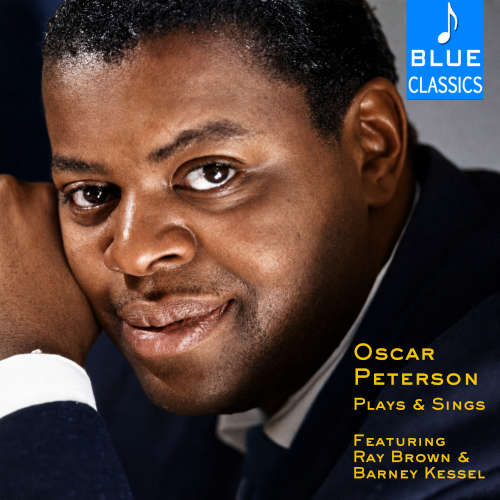 Oscar Peterson Plays & Sings
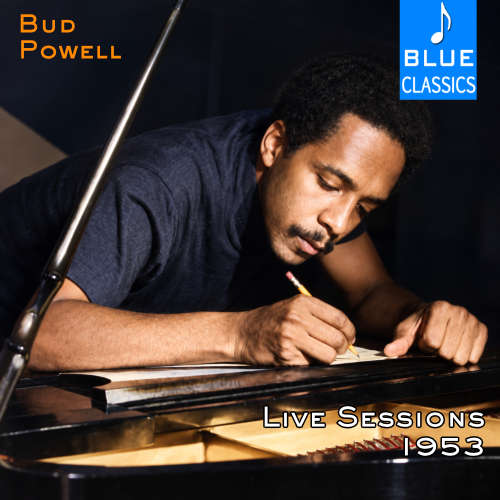 Live Sessions 1953
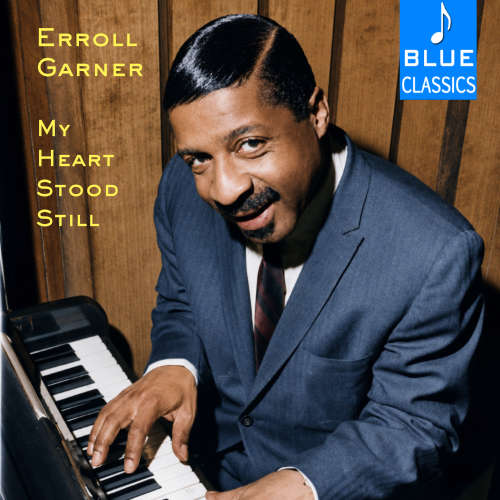 My Heart Stood Still

Jimmy van Heusen - composer
Jimmy van Heusen (b. January 26, 1913 – d. February 6, 1990) born Edward Chester Babcock, was an American composer and pianist whose songs became part of the repertoire of Broadway, Hollywood, popular music, and jazz. He wrote more than 800 songs, worked with some of the leading lyricists of his generation, and became particularly closely associated with Bing Crosby and Frank Sinatra. Sinatra recorded more songs by Van Heusen than by any other composer.Van Heusen was born on January 26, 1913, in Syracuse, New York. Music was already present in his family: his father, Arthur Babcock, was a building contractor and amateur musician, and his mother, Ida, encouraged his musical interests. Babcock began writing songs while still at school and became involved with local radio while he was a teenager. He developed a reputation for improvising music for listeners and for entertaining audiences with his piano playing.
His professional name originated in a rather unexpected way. When Babcock was about sixteen and working in radio in Syracuse, he needed an on-air name. According to the surviving accounts, his friend Ralph Harris saw a Van Heusen collar advertisement/billboard from the Hotel Syracuse, and the name suggested itself. Babcock adopted “Van Heusen” as his professional surname. For the first name, Harris suggested “Jimmy,” after a favourite cousin. The name associated with the shirt and collar manufacturer consequently became the name under which the young musician entered the professional world.
His teenage years in Syracuse were not entirely conventional. He was expelled from Central High School after performing a comic song, My Canary Has Circles Under His Eyes, at a school assembly. His classmates enjoyed it; the school's authorities did not. He subsequently attended Cazenovia Seminary and Syracuse University, where he studied music and became friends with Jerry Arlen, younger brother of composer Harold Arlen.
Before leaving Syracuse, Babcock had already found an ingenious way of making money from music. As a teenage radio performer at WSYR, he developed a side business as a “song doctor.” For $10, aspiring songwriters could send him lyrics, music or a tune that needed work. The young Babcock would improve the material and then perform the resulting song on the radio.
In 1933, Van Heusen went to New York City. Through Jerry Arlen and Harold Arlen, he became involved with the Cotton Club, where he supplied songs for revues. He also worked as a pianist and song plugger for music publishers in Tin Pan Alley. This was an important practical education: he learned how songs were written, demonstrated, promoted, arranged and sold, while becoming acquainted with the performers and publishers who formed the centre of the American popular-music industry.
Van Heusen's first years in New York were far removed from the Hollywood life that would come later. During the Depression he was at one point unemployed and broke. He worked as an elevator operator at the Park Central Hotel for $15 a week and lived across the street at the Wellington Hotel, where his room cost $14 a week. At the same time, he was surrounded by the music and nightlife of 1930s Manhattan. A walk down 52nd Street in the early hours could bring him into clubs where musicians such as Billie Holiday, Fats Waller, Art Tatum and Count Basie were performing.
His first major success came through “It's the Dreamer in Me,” written with Jimmy Dorsey and published in 1938. The song was recorded by several prominent orchestras and singers, and its success led Remick Music Corporation to place Van Heusen under contract as a staff composer.
Another important step came with his collaboration with lyricist Eddie DeLange. Together they produced songs including “Darn That Dream,” “Deep in a Dream,” “Heaven Can Wait,” “All This and Heaven Too,” and “Shake Down the Stars.” Van Heusen's productivity was already considerable; according to biographical accounts, he wrote more than sixty songs in 1940 alone.
When Van Heusen finally began receiving substantial royalties from his songs, one of his first major extravagances was not a house or a car but an airplane. He bought a Luscombe Silvaire, a two-seat, all-aluminum monoplane, and took flying lessons at Floyd Bennett Field. He soon began flying solo and eventually used his own aircraft to travel between New York and California.
In 1939–40, Van Heusen began his long association with lyricist Johnny Burke and moved to Hollywood. Burke and Van Heusen became an important songwriting team, particularly through their work for Bing Crosby. They wrote for a succession of films, including several of the Road pictures starring Crosby, Bob Hope and Dorothy Lamour. Their collaboration produced songs such as “Moonlight Becomes You,” “It Could Happen to You,” “But Beautiful,” “Swinging on a Star,” and “Aren't You Glad You're You.”
Van Heusen's career during the early 1940s had an unusual second dimension. He had become seriously interested in aviation and learned to fly. During the Second World War he combined songwriting with work as a test pilot at Lockheed's Burbank plant, flying aircraft including P-38s and C-60s. He worked under his real name, Edward Chester Babcock, keeping the aviation work separate from his professional identity in Hollywood. Contemporary accounts describe him working as a test pilot between approximately 1942 and 1944. He also sometimes served as Bing Crosby's pilot while travelling to military camps during the war.
The arrangement was potentially dangerous. Van Heusen was already a successful film composer, and a serious accident while test-flying military aircraft could have interrupted his Hollywood career. His decision to continue flying nevertheless illustrates how important aviation was to him. He continued flying his own aircraft for many years and eventually owned both airplanes and a helicopter.
The partnership with Johnny Burke continued into the early 1950s. Their songs were particularly effective for Bing Crosby, whose relaxed vocal style suited Van Heusen's melodies. Their first Academy Award came with “Swinging on a Star,” from Going My Way, which won the Oscar for Best Original Song for the 1944 film.
Van Heusen's relationship with Frank Sinatra had begun much earlier. The two had met in New York during the mid-1930s, when Sinatra was still struggling to establish himself as a singer and Van Heusen was working as a song plugger. Their professional relationship developed into a close personal friendship that lasted for the rest of their lives.
Their partnership became particularly important after Sinatra's career revival in the 1950s. In 1955, Van Heusen began his long collaboration with lyricist Sammy Cahn. Together they wrote extensively for Sinatra, including songs specifically designed for his films, albums and television appearances. Their work included “Love and Marriage,” “All the Way,” “Come Fly with Me,” “The Tender Trap,” “High Hopes,” “Only the Lonely,” “The Second Time Around,” “Call Me Irresponsible,” and many others.
The working relationship between Van Heusen, Cahn and Sinatra was unusually direct. Cahn later described their creative process by saying that if Sinatra wanted a new song, the phone call itself could be the starting point. Van Heusen could write quickly, and Cahn and Van Heusen developed songs with Sinatra's particular vocal style in mind. Van Heusen himself later said of Sinatra, “He's the greatest,” emphasizing Sinatra's ability to choose his collaborators and leave them to do their work.
Van Heusen had a particular joke that amused Frank Sinatra enormously. Whenever he arrived in a new American city, he would look through the telephone directory for people whose surnames ended in “-cock” — Hancock, Woodcock, Hitchcock, Glasscock and others — and call them at random. If a woman answered, so much the better. In his characteristic W. C. Fields-like voice, he might say, “Mrs. Glasscock? Chester Babcock calling. I just wanted to check on what the other cocks were up to.” According to Vanity Fair, Sinatra would reportedly roll on the floor laughing at these calls. The joke became part of the private mythology surrounding the friendship between the two men.
The joke did not stop on the ground. When Van Heusen was flying his own aircraft across the United States, he would sometimes call out the word “cock” over the aircraft radio until an air-traffic controller responded, “Please identify yourself.” Rather than giving a normal identification, Van Heusen would simply repeat the word, even louder. The same irreverent humour accompanied him when he travelled abroad. During one stay at Rome's Grand Hotel, he reportedly stepped onto his balcony each morning and loudly crowed “Cock” like a rooster.
The partnership with Sinatra produced three further Academy Awards for Van Heusen. “All the Way” won the Oscar in 1957, “High Hopes” in 1959, and “Call Me Irresponsible” in 1963. In addition, Van Heusen won an Emmy Award for “Love and Marriage” in 1955.
Van Heusen's connection with Sinatra and John F. Kennedy produced one of the more memorable episodes in his biography. “High Hopes,” written by Van Heusen and Sammy Cahn, was used by Kennedy's 1960 presidential campaign and became closely associated with Kennedy. Sinatra subsequently performed the song in connection with the presidential campaign and the 1961 inauguration.
Van Heusen himself was also personally acquainted with Kennedy. When Kennedy's relationship with Sinatra became strained because of concerns surrounding Sinatra's associations and the planned presidential visit to Palm Springs, Kennedy's arrangements changed and he stayed at Bing Crosby's nearby home instead of Sinatra's. Sinatra was furious. According to Vanity Fair, during a later recording session he turned to Van Heusen and said: “Tell you what, Chester. Why don't you get Jack Kennedy to record this …” The episode illustrates the difference between Van Heusen's personal friendship with Kennedy and Sinatra's increasingly complicated relationship with the Kennedy family.
Despite the enormous success of his film and popular songs, Broadway was never Van Heusen's principal field. He contributed to several stage productions, but his greatest professional success came from Hollywood, recordings, television, and popular song. His melodies were particularly suited to singers, and many subsequently became standards in jazz.
Van Heusen's compositional style was well suited to this wider musical life. His melodies were often direct and memorable, but the harmonic structures beneath them could be more sophisticated than their apparent simplicity suggested. This combination made the songs attractive to jazz musicians, who could use them as frameworks for improvisation while retaining the identity of the original melody. His compositions therefore travelled easily between films, popular recordings and the jazz repertoire.
His partnership with Sammy Cahn continued for more than a decade. Together they were particularly productive during the period when Sinatra's recording career was at its commercial peak. Van Heusen could respond quickly to a lyric and create a melody that fitted both the text and the singer for whom it was intended. Cahn later called him an “architect of melody,” describing his ability to rebuild an entire melodic idea rather than simply modify a single note.
Van Heusen also maintained the unconventional lifestyle that had accompanied his career since his youth. He was known for flying, socialising and maintaining a very active social life. He remained a bachelor for most of his life and married Bobbe Brock in 1969, when he was 56. He retired from songwriting around the same period.
One anecdote frequently associated with his early New York period concerns how he survived while trying to establish himself as a songwriter. Biographical accounts describe his financial circumstances as extremely modest during his early Tin Pan Alley years, but I have not found a sufficiently reliable source to verify the specific claim that he lived on exactly one dollar a day. I would therefore not state that as an established fact in a liner note. What is firmly documented is that he arrived in New York with very limited professional standing, worked as a pianist and song plugger, and gradually built his career through the publishing houses of Tin Pan Alley.
Van Heusen's connection with Syracuse remained an important part of his identity. His professional name may have come from a shirt-collar advertisement visible in his hometown, but his career eventually took him from local Syracuse radio to Tin Pan Alley, the Cotton Club, Hollywood studios, wartime aviation, Broadway, television and the recording studios where he created many of the songs most closely associated with Frank Sinatra and Bing Crosby.
Jimmy Van Heusen died in Rancho Mirage, California, in February 1990, aged 77. He left a catalogue of hundreds of songs, including a substantial group that became standards far beyond their original film and theatrical settings. His four Academy Awards and Emmy recognised only part of his contribution. His melodies continued to be recorded by singers and jazz musicians, while his collaboration with Sinatra became one of the defining composer–performer relationships of twentieth-century American popular music.
Van Heusen's career is therefore best understood not simply as that of a Hollywood songwriter, but as that of a musician who moved easily between Tin Pan Alley, radio, Broadway, Hollywood, television, popular song and jazz. His partnership with Johnny Burke established him as a major songwriter for Bing Crosby; his later work with Sammy Cahn made him a central composer in Sinatra's repertoire; and his unusual parallel life as a pilot gave him a career outside music that was almost as unconventional as his personal style. Above all, his songs demonstrated an ability to combine melodic clarity with harmonic possibilities that allowed them to remain useful to performers long after their original films and shows had disappeared from the stage and screen.
Jimmy Van Heusen was an unusually unconventional figure in American popular music: a prolific composer who also flew his own aircraft, worked secretly as a wartime test pilot, maintained a famously irreverent sense of humour, and moved with equal ease between Hollywood studios, New York nightlife and the company of some of the most famous performers of his era.